The 80s are responsible for producing iconic performance cars that inspired the generations after it. Automakers invested heavily into turbochargers, All-Wheel-Drive systems and lightweight construction to achieve greater levels of power and speed. This list ranks the most powerful cars of the 80s, from the most powerful to the least. Unlike the time when we took a look at the quickest cars of an era, this post is focusing on horse power. Figures and data used in this listicle were published by Encarcypedia
Before you read any further, you might want to
1. 1989 Vector w8 Twin-Turbo – 600 Hp

The Vector W8 TwinTurbo is a not-so-popular American gem capable of producing monstrous power from its mid-mounted V8. Ranking first among these powerful classic cars, the Vector W8 generates 600Hp from 6.0-litre twin-turbocharged V8 and sends all that power to its rear wheels. It has a claimed top speed of 351km/h and acceleration of approximately 4.3 seconds.
The Vector W8 looks similar to a Lamborghini Countach LP 400, with its dramatic wedge-shaped design and scissors door.
| Specification | Figure |
| Acceleration 0-100km/h | approximately 4.0 s |
| Top speed | 351 km/h |
| Power output | 600hp |
| Torque | 813Nm |
| Power per litre | 100 hp/L |
2. 1986 Ford RS200 Evolution – 572 Hp
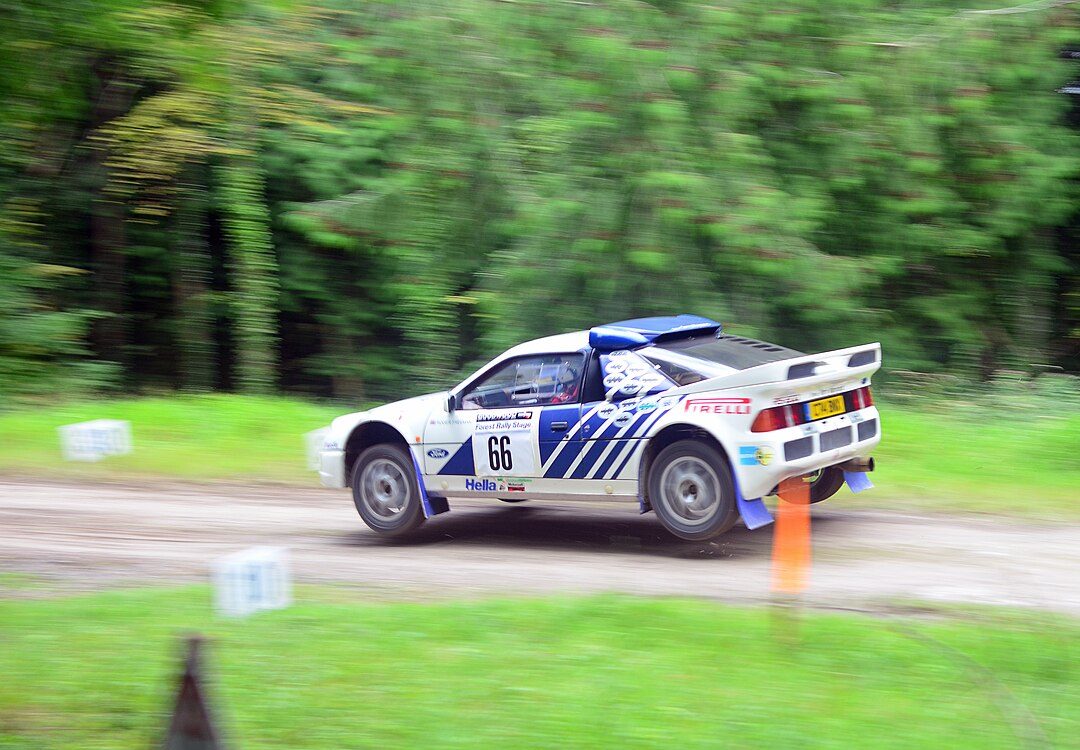
Ford released the RS200 Evolution in 1986: a performance weapon disguised as a compact coupe. The Evolution was the road version of RS200 rally car built for the infamous Group B rally. Powered by a mid-mounted 2.1-litre turbocharged, four-cylinder engine – one of the smallest engines on this list – the RS200 Evolution produced approx. 572 Hp and 542Nm of torque.
Power figures for the RS200 Evolution may vary considerably depending on the engine tune and competition specifications. Some sources put typical power output closer to 580 hp, while other setups produced substantially more. This, however, does not strip it of its calibre and merit as a rally-bred beast.
With its engine positioned behind the cabin, the RS200 used a mid-engine layout and all-wheel-drive system that put all that power to the road. Its lightweight construction also helped turn it into a proper rally-bred weapon.
| Specification | Figure |
| Acceleration 0-100km/h | approximately 3.8 s |
| Top speed | 272 km/h |
| Power output | 572 hp |
| Torque | 542 Nm |
| Power per litre | 272 hp/L |
3. 1987 Porsche 959 S – 508 Hp
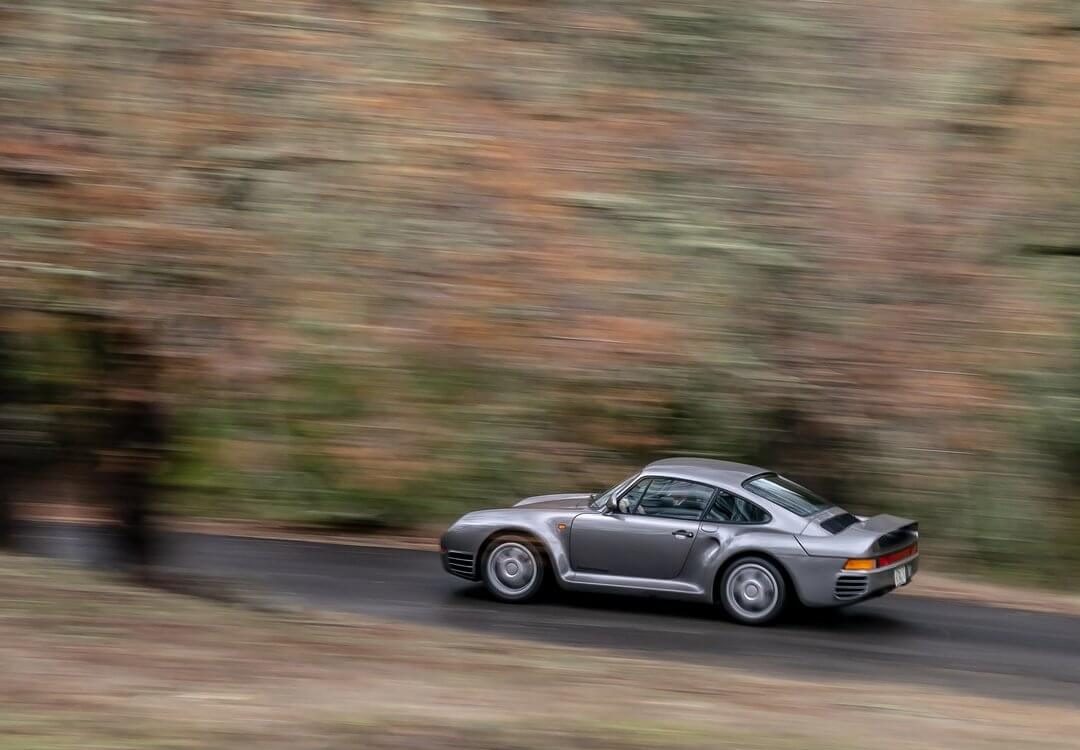
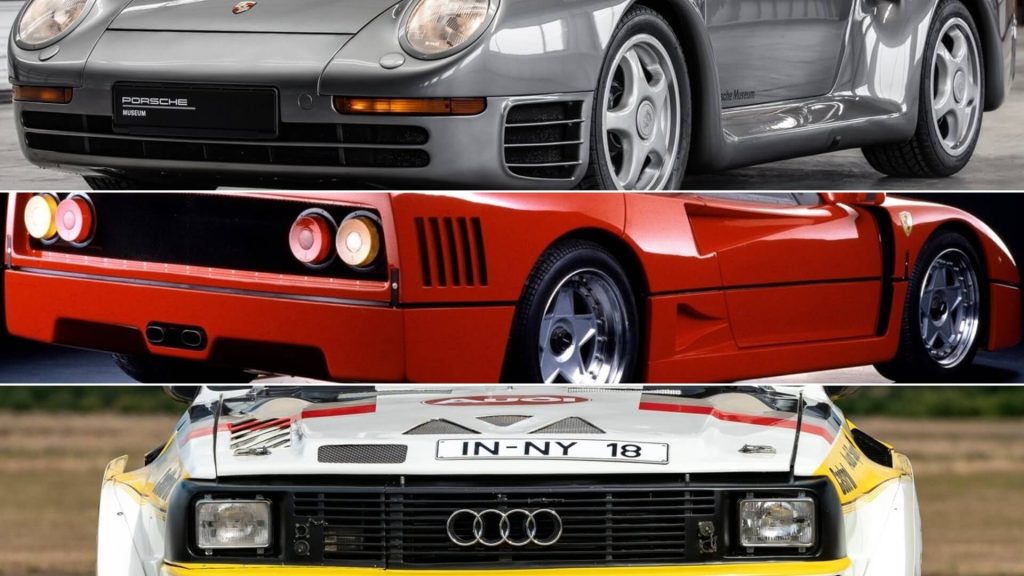
During the 80s, the 959 S reflected Porsche’s new approach to high-performance technology and development. The Porsche 959 S reached a neck-breaking top speed of 340 km/h, with an eye-watering acceleration to 100km/h in 3.7seconds.
This level of performance came from a relatively small 2.8-litre twin-turbocharged flat-six engine, which was a shift away from Porsche’s infamous 3.0-litre found in the 911s.
With a short production run from 1987 to 1988, the Porsche 959 S was lighter with an all-wheel-drive system and adjustable suspension. The technology and development that went into this high-performance road and competition machine influenced later models.
| Specification | Figure |
| Acceleration 0-100 km/h | approximately 3.7 s |
| Top speed | 340 km/h |
| Power output | 508 hp |
| Torque | 561 Nm |
| Power per litre | 181 hp/L |
4. 1985 Audi Sport quattro S1 E2 – 473 Hp
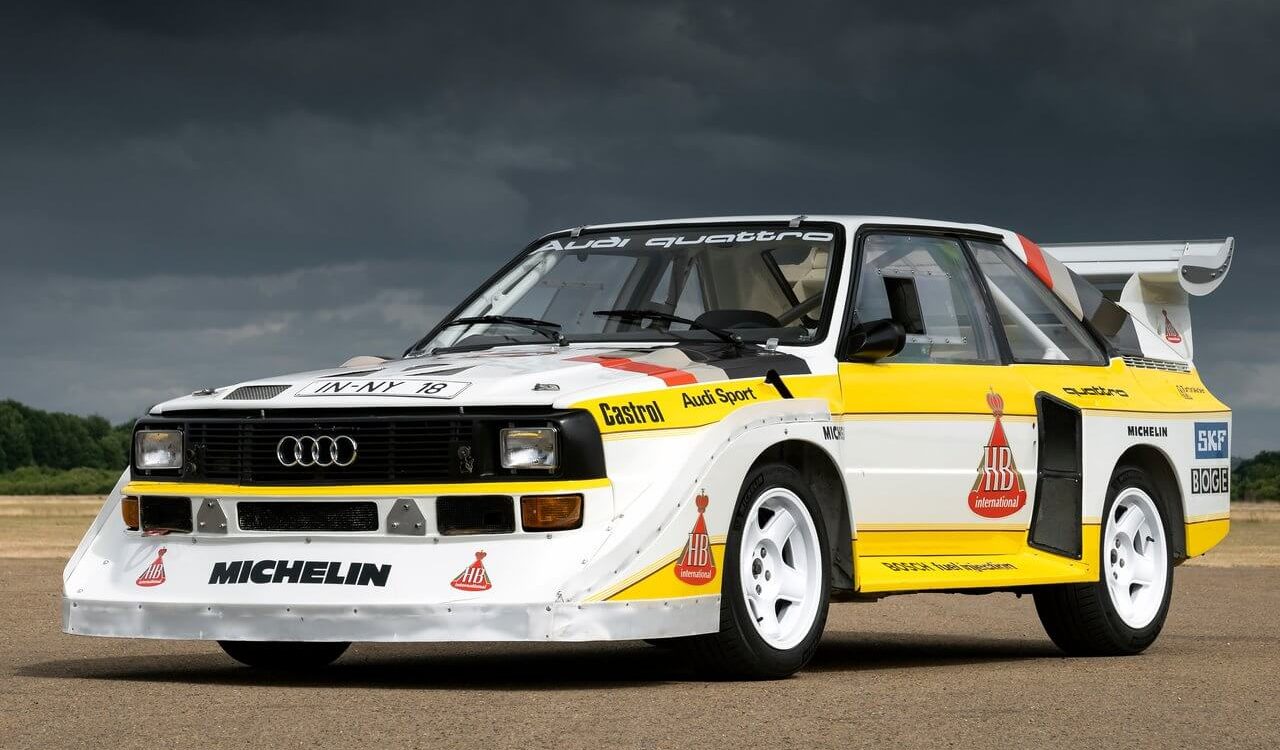
Another infamous Group B rally car makes this list in the form of the Audi Sport Quattro S1 E2. Introduced at the end of 1985, Audi built the S1 E2 around a 2.1-litre turbocharged inline-five engine, and its famous quattro all-wheel-drive system. This configuration generated approximately 473Hp and 590Nm of torque.
That meant that the Audi Sport quattro S1 E2 could accelerate to 100km/h in 3.1 seconds and reach a top speed of 249 km/h. Its short wheelbase and large aerodynamic body helped improve agility and stability as it scampered through rally stages like a mongoose chasing its dinner.
A true gladiator of the Group B rally, and one of the most powerful cars of the 80s, Audi ensured that the S1 E2 earned and cemented its place in the history books.
| Specification | Figure |
| Acceleration 0–100 km/h | approximately 3.1 s |
| Top speed | 249 km/h |
| Power output | 473 hp |
| Torque | 590 Nm |
| Power per litre | 225 hp/L |
5. 1987 Ferrari F40 – 472 Hp

The F40 was the last Ferrari road car personally approved by Enzo Ferrari and became one of the most iconic Ferraris ever created. Built to celebrate the automaker’s 40th anniversary – hence the name – the F40 arrived with a 2.9-litre twin-turbocharged V8 capable of producing 472 Hp.
With a lightweight body and a mid-mounted engine sending power to its rear wheels, the Ferrari F40 prioritized performance and power. It could reach a top speed of 323km/h and sprint to 100km/h in approximately 4.1seconds.
| Specification | Figure |
| Acceleration 0-100 km/h | 4.1 s |
| Top speed | 323 km/h |
| Power output | 472 hp |
| Torque | 577 Nm |
| Power per litre | 161 hp/L |